Are you flying from the UK soon but worried about being charged for having too much extra luggage? Baggage fees and suitcase limits can make packing feel like a game of Tetris. But space-saving doesn’t have to mean sacrificing essentials.
Whether you’re simply packing hand luggage or will be taking suitcases that need to be checked in, these tips – based on the experience of real UK travellers – will help make every inch count.
“Use packing cubes, but fold and roll your clothes before placing in the cubes. This has saved me so much space on longer trips.”
We’ve ordered them by estimated space-saving potential – from biggest to more modest gains – to help holidaymakers fly smarter.
| Tip | Approx % Space Saved | Highest Impact by Traveller Type |
| 30-50% | Many clothes, longer trips, mixed fabrics | |
| 20-40% | Multi‑day trips, style & function needed | |
| Make a list | 10‑25% | All travellers, especially prone to overpacking |
10‑20% | Especially useful for fashion / varied weather trips | |
10‑15% | Trips over 5 days, destination with facilities | |
10‑15% | Useful for neat packing & frequent travellers | |
5‑15% | If bringing multiple pairs of shoes, accessories | |
5‑10% | For flexible sizing, when near airline limits | |
5‑10% | If you have heavy outerwear / boots | |
5‑10% | If you tend to pack too many shoes | |
5‑10% | Helps reduce last‑minute rubbish | |
3‑7% | If you use many full‑size liquid products |
*These are rough estimates; exact saving depends on individual packing style, destination, and duration
1. Roll Your Clothes (or Use Compression / Dry Bags)
“rolling clothes especially thin ones save sooo much space than folding”
Rolling clothes instead of folding is a tried-and-true method many seasoned travellers swear by. It reduces wrinkles and allows more efficient use of space, especially with lightweight fabrics.
For those wanting to take it further, compression or dry bags can dramatically reduce bulk by forcing out trapped air. UK outdoor / backpacking blogs note that dry bags lock out air and water, giving both protection and space gain.
It’s an easy switch from traditional packing styles that can free up a surprising amount of room.
- Key Idea: Roll clothes tightly or use dry/compression bags to force out air and reduce volume.
- How much space could this save: Up to 30-50% of the space taken by clothes. It’s especially useful for T‑shirts, thin layers, and underwear.
- Top Tip: Combine rolling with thin, technical fabrics to further reduce bulkiness.
- Note: Some fabrics don’t roll well (e.g. stiff denim, structured shirts) – roll the softer items, fold the rest.
2. Choose Versatile / Multi-Use Clothing Items
“colour‑coordinate pieces so you can mix and match, streamlining your wardrobe”
Multi-use items mean packing less without feeling like anything’s missing. A single smart-casual dress or pair of trousers can suit multiple scenarios – from beach day to city dinner. Selecting clothing that matches well across outfits allows for more combinations with fewer pieces. This tip isn’t about clever folding – it’s about thinking through each outfit and eliminating redundancies.
Aim for pieces you know you will wear multiple times rather than “just in case” items.
- Key Idea: Choose items that serve multiple purposes (convertible clothing, neutral colours, layers), so you pack fewer pieces overall.
- How much space could this save: Up to 20-40% reduction in clothing volume.
- Top Tip: Choose fabrics that pack small (jersey, merino, technical blends) rather than bulky knits unless essential.
3. Know Exactly What You’re Packing (Make a List & Edit)
“I used to be pretty efficient packer … then realised I pack things I ‘might’ wear but never do”.
Overpacking often starts with indecision. Making a list – and sticking to it – is a simple, effective way to take control of your packing. UK travellers often recommend laying everything out, then editing ruthlessly. Leave out the “just in case” extras. This method brings clarity and helps avoid duplication.
- Key Idea: Create a list and pack only what’s essential.
- How much space could this save: 10-25% by avoiding excess.
- Top Tip: Use clothing trials. Pack at home, then take out 1‑2 items you won’t use.
- Note: Base lists on past trips: what was used vs left untouched.
4. Plan Your Outfits & Colour Scheme
Planning outfits in advance helps avoid unnecessary items. Rather than packing random pieces, design a capsule wardrobe for the trip: 2-3 colours, interchangeable pieces, smart layering. Select colours and items that mix & match, and pick outfits rather than individual items.
This tip isn’t just about space, but also about simplifying decisions while away. It’s an easy win that keeps luggage light and style intact.
- Key Idea: Design interchangeable outfits using a set colour palette.
- How much space could this save: 10-20% of clothing volume by reducing the number of tops, bottoms, and accessories.
- Top Tip: Planning outfits also helps avoid overpacking “just in case” items.
- Note: Lay out each day’s outfit at home to visualise what you’ll actually wear.
5. Do a Little Laundry Mid-Trip
Washing clothes while abroad may sound tedious, but it lets you pack far less. Many hotels, hostels and B&Bs have laundry facilities, or you can handwash basics in a sink. Pack lighter, rotate outfits and avoid excess baggage fees with this underrated strategy.
For week‑long trips you might be able to reduce packing by one full set of clothes, saving space & weight.
- Key Idea: Reduce what you pack by planning to wash during the trip.
- How much space could this save: Up to 10-15%, especially for longer stays.
- Top Tip: Pack quick‑dry items so laundry dries overnight.
- Note: Bring a small laundry bag so dirty clothes are separated; reduces the need to pack spares.
6. Use Packing Cubes & Organisers
Packing cubes help structure your suitcase and compress soft items. They’re also handy for organisation – group items by type or day of wear. Many UK travellers report feeling more in control of their packing and more efficient when using cubes.
- Key Idea: Use compression cubes to compact clothes and organisers to compartmentalise items. Keeps things tight, easier to compress, reduces wasted air space.
- How much space could this save: 10-15%, depending on how efficiently you pack by reducing loose bulk and maximizing efficient stacking.
- Top Tip: Label cubes or use colour coding to know which contains what.
- Note: Compression cubes are better for certain items; non‑compression for items you prefer less wrinkled.
7. Utilise the Space Inside Your Shoes & Fill Gaps
“… had room for two SLR cameras and souvenirs! … all from rolling, and using shoes well”
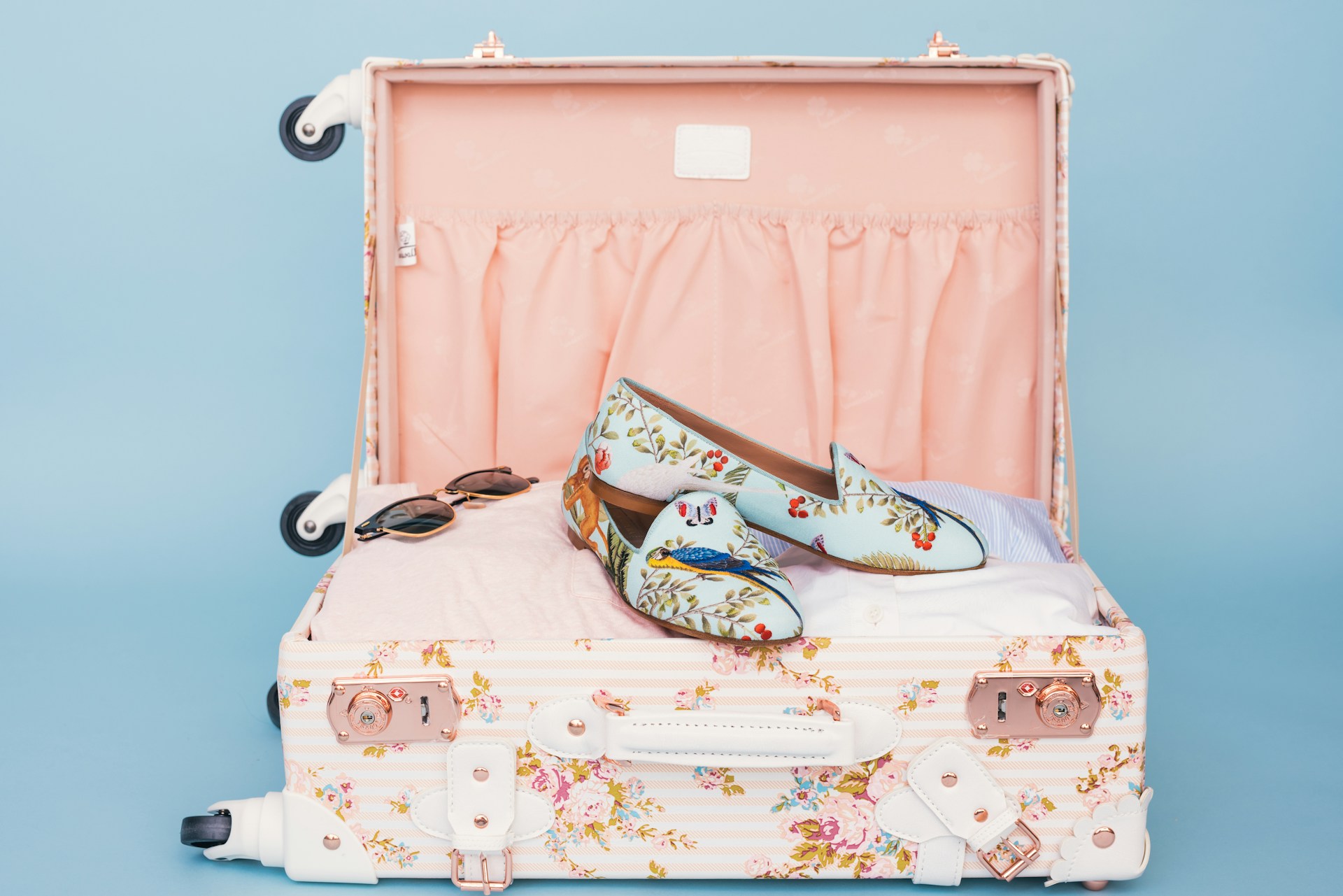
Shoes take up a huge chunk of suitcase real estate, but their hollow interiors are often wasted. Tuck socks, belts, sunglasses or power banks inside them. Then, look for gaps – edges, corners, and voids between cubes or piles – and fill them smartly. These micro spaces add up.
- Key Idea: Use every available hollow, including inside shoes.
- How much space could this save: 5-15%, depending on number of shoes.
- Top Tip: Place shoes near the edges so they create a flat base or side and fill with soft items.
- Note: Use shoe bags to keep clean vs dirty, prevent shoes damaging clothing.
8. Opt for a Soft-Sided Suitcase or Expandable Bag
“Choosing luggage that can flex rather than being hard shell is a real game-changer…“
Luggage choice matters. Soft-sided suitcases or expandable luggage allow for more give when packing. They can flex slightly when filled, making it easier to squeeze in last-minute items. This flexibility is often the difference between a snug zip and a suitcase that won’t close.
And the lighter materials reduce weight to help you stay within the limits.
- Key Idea: Choose luggage that adjusts with your needs.
- How much space could this save: 5-10% more usable capacity than rigid cases; plus, weight savings can avoid fees.
- Top Tip: Check airline restrictions re weight vs dimension. Soft‑sided may bend, but dimensions must still stay within allowed limits.
- Note: Consider wheels, handles, material – soft materials are sometimes less protective, so use packing protection for fragile items.
9. Wear Bulky Items on the Plane
Bulky boots, puffy jackets and thick jumpers don’t belong in your case – they belong on you. Wearing heavier items while flying is a classic trick for lightening your suitcase without compromising on clothing choices. Bonus: planes can be cold, so you’ll likely be glad of the layers.
- Key Idea: Keep large or heavy items out of your case by wearing them.
- How much space could this save: Equivalent to 1-3 kg of gear and a similar volume that might otherwise take up precious space.
- Top Tip: Bulkiest footwear should be worn; pack a pair of lighter shoes instead.
- Note: Use your plane jacket pockets for items you might have otherwise packed such as gloves.
10. Limit Shoes to One or Two Pairs
Shoes are often the bulkiest items in a case. Unless a specific activity demands it, there’s rarely a need for more than two pairs. Aim for one pair worn, one packed – both lightweight and versatile enough to handle all planned activities.
One pair should be practical to cover walking and casual occasions, while the second pair could be for nicer occasions such as visiting a restaurant. Try and use styles that can cross over.
- Key Idea: Cut down to the fewest possible shoes.
- How much space could this save: 5-10% of total volume.
- Top Tip: Use shoes to hold small things such as socks.
- Note: Wear your heaviest shoes when travelling.
11. Pack Early & Trial Pack Before You Travel
Packing at the last minute almost guarantees overpacking. Trial packing a few days before travel lets you reconsider each item and adjust strategy. Taking that extra day or two makes all the difference.
Pack a few days ahead, then revisit and remove anything not used. Try compressing and reorganising, while simply opening your suitcase helps you see wasted space.
- Key Idea: Practice and refine your packing method ahead of time.
- How much space could this save: 5-10% through smart decision-making, removing unneeded items, and will avoid last‑minute overpacking.
- Top Tip: Take photos of your layout; sometimes seeing it helps decide what’s excess. And it will make packing on the return journey easier too!
- Note: Leave space for souvenirs or last‑minute purchases.
12. Use Travel-Sized Toiletries or Buy Abroad
Full-sized shampoos and body washes are heavy, bulky and rarely needed for short trips. Refillable travel bottles or solid alternatives work well for essentials.
Instead of full‑size bottles, use small travel containers and top up depending on the number of days you’ll be away.
Many UK travellers now buy toiletries at their destination, especially for longer holidays or if prices abroad are likely to be cheaper.
- Key Idea: Minimise or eliminate full-size liquid containers.
- How much space could this save: 3-7% of total volume, often more in weight.
- Top Tip: Buy key toiletries at destination if needed.
- Note: Use solid options where possible (solid soap, shampoo bars) to avoid leaks.
Conclusion
Packing light doesn’t require sacrifice – it requires strategy. Air travellers have developed dozens of smart ways to make every corner of their case work harder. From rolling clothes to limiting the number of shoes they take, each tip above offers a realistic, actionable way to reduce suitcase bulk and avoid forking out for excess baggage charges.
With a bit of planning and a few clever swaps, it’s possible to travel smarter, lighter and with less stress. Try combining a few of these tips for maximum effect on your next holiday abroad.
Main image: Arnel Hasanovic – Unsplash